



Hybrid GenAI Search – Combining RAG & Knowledge Graph
By combining RAG with Knowledge Graphs, this hybrid search solution enables more contextual and accurate information retrieval. This approach enhances search relevance and provides a deeper understanding of data relationships, perfect for advanced analytics needs in enterprises. In a recent case study involving biomedical data, we applied both RAG and knowledge-based information retrieval approaches to achieve more accurate and complete answers. This combined method is especially beneficial in use cases where the accuracy and completeness of answers are critical to the business process—much like how ensemble models improve prediction accuracy in machine learning.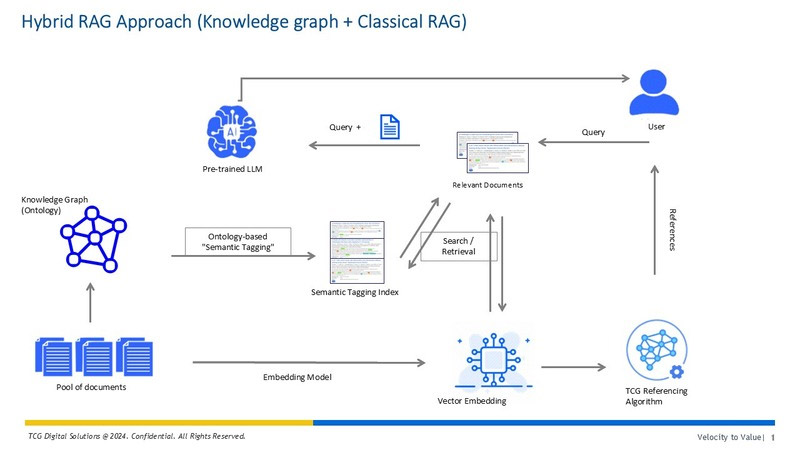

Test Case Creation using GenAI – LIMS Test Method Validation
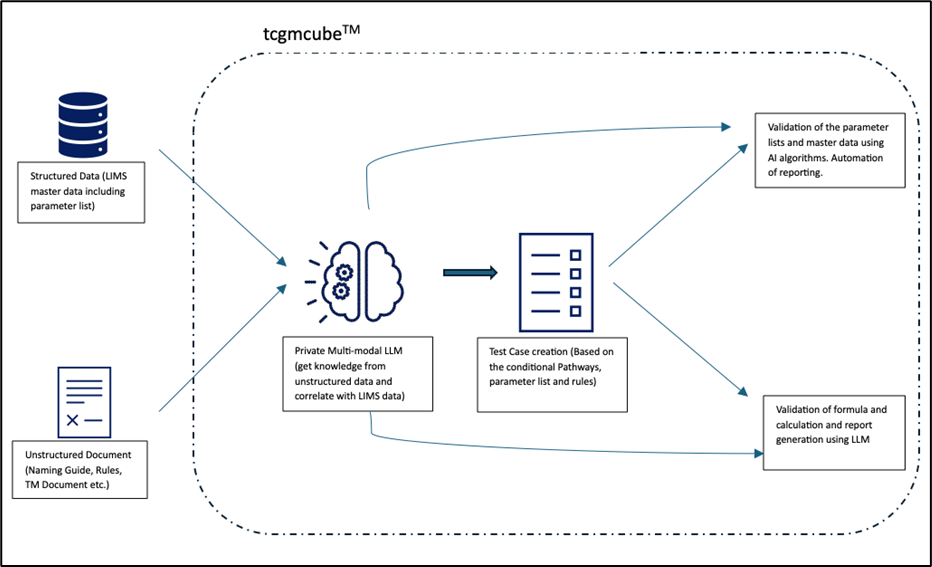
The LLM plays a crucial role by interpreting diverse data sources—such as text documents, method protocols, technical standards, and structured data within LIMS—allowing it to cross-validate test methods, parameter lists, and configurations. This intelligent automation ensures that the entire process adheres to industry standards, improving operational efficiency and accuracy.
Test Method and Naming Verification: The solution begins by validating naming conventions and parameter lists for test methods by analyzing the Naming Guide and comparing it with LIMS metadata. The LLM flags inconsistencies, ensures all required fields (e.g., Parameter List ID, Repeat Count, Equipment links) are completed correctly, and confirms compliance with naming standards, reducing human errors and maintaining procedural accuracy.
Parameter and Configuration Validation: The solution extracts relevant parameters (e.g., Data Type, Units, Replicates) from the test method documentation and compares them to LIMS configurations. This guarantees that the parameter structures align with the test method flow, ensuring data consistency. The LLM also automates sample creation in LIMS to validate data integrity and alignment.
Consumables and Instrument Integration: The multimodal LLM interprets the test method documents to identify the required consumables and instruments, verifying their availability and status (active or expired) within LIMS. This ensures that only available, compliant items are used in test setups, further enhancing accuracy and efficiency.
Validation of Conditional Statements and Calculations: One of the most complex tasks involves verifying conditional logic and calculated components within test methods. The LLM extracts parameters, rules, and conditions from LIMS master data and generates test data to validate various pathways. Through simulations (using Design of Experiment or LLM methods), it checks for boundary conditions and exception cases, ensuring that calculations and workflows operate as expected.
Unit Consistency and Standards Compliance: The LLM ensures that the units in LabVantage result parameters match the technical standards, preventing errors caused by incorrect units. In cases requiring manual calculations, such as using the Master Verification template, the LLM automates complex calculations, generates reports, and uploads them as evidence for documentation.
In summary, this end-to-end automated solution provides seamless test method validation in LIMS by integrating AI to handle both structured and unstructured data. Its ability to validate workflows, interpret complex calculations, and ensure regulatory compliance significantly reduces human error, boosting efficiency and ensuring accurate test method verification.


GenAI-Powered Fabric Design
Innovative Fabric Patterns creation:
Leverages Generative Adversarial Networks (GANs) and Neural Style Transfer to create unique fabric that blend traditional aesthetics with modern AI technology.
Neural Style Transfer Algorithm:
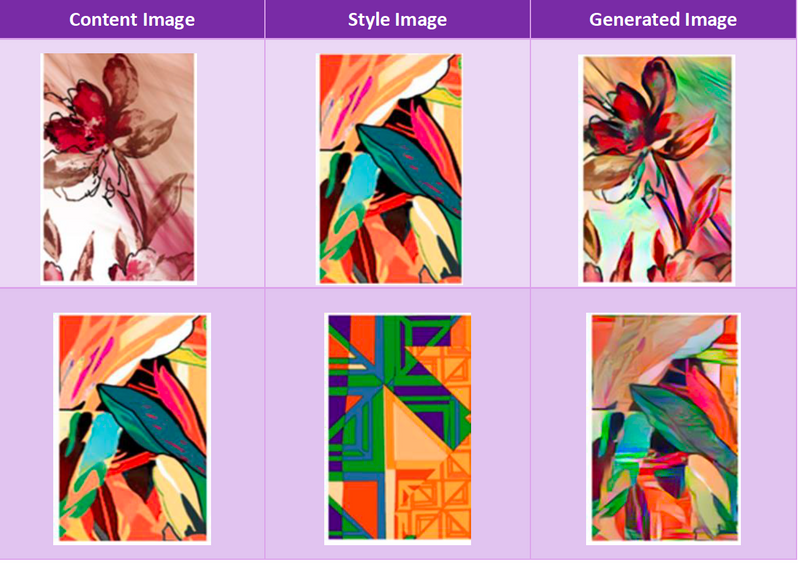
- Merges content images (base fabric design) with style images (textures, color schemes, patterns).
- The content image provides structure and layout, while the style image contributes aesthetic features.
- The algorithm minimizes the difference between the original images and the generated design, preserving the fabric’s base structure and integrating artistic styles.
User Interface (UI):
- Allows image uploads for both content and style images.
- Provides sliders to adjust the ratio between “content contribution” (retaining original design) and “style contribution” (influencing the design with style elements).
- Designers can preview real-time iterations, experimenting with different settings before finalizing a design.
Creative Flexibility:
- Utilizes StyleGAN for high-quality image synthesis.
- Uses Cycle GAN for unpaired style transfer, enabling transformations without the need for paired data.
Workflow:
- Fabric image collation, pre-processing, image classification, model training, validation, and a design feedback loop.
- Enables designers to create high-quality synthetic saree samples that blend tradition with cutting-edge innovation.
Result Images


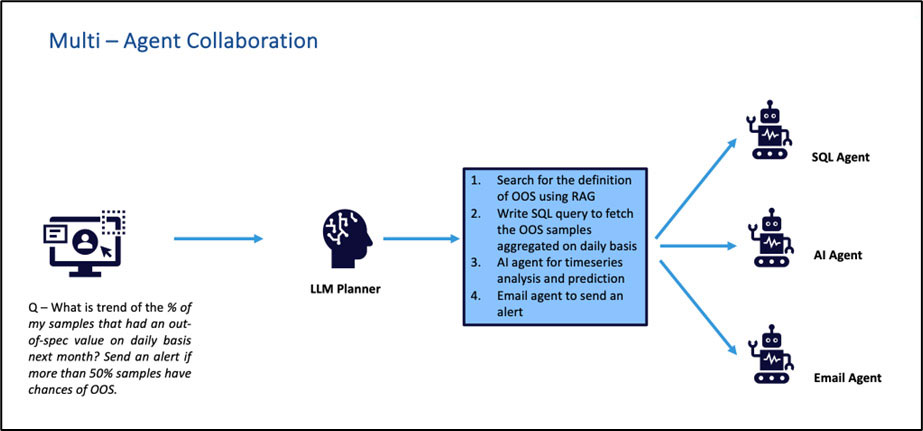
Agentic Architecture – AI Agents and Text-to-Query Agents
Identification of Potential Anomalies: The system continuously monitors data, identifying potential anomalies that could cause slowdowns or shutdowns. By leveraging AI, it flags abnormalities early, helping operators prevent costly disruptions. This early identification allows for timely intervention, minimizing unplanned downtime and ensuring smoother operations.
Alert Importance, Causes, and Outcomes Assessment: The architecture assists operators in assessing the importance, causes, and potential outcomes of each alert. By correlating the alerts with operational trends and past incidents, it provides a clearer understanding of which anomalies pose the greatest risk. This allows for more informed decision-making and resource allocation when addressing critical issues.
Financial Overlay for Cost and Loss Insights: The system not only identifies anomalies but also provides insights into the associated costs and losses. By integrating a financial overlay, it quantifies the opportunity cost/production loss and the cost of repairs required to address the anomaly. This dual focus on operational and financial impact enables a more comprehensive approach to risk management.
GenAI agent for Automated Fault Tree Traversal: To further enhance anomaly resolution, Generative AI is used for automated and guided fault tree traversal. This technique helps identify the root causes of potential anomalies and recommends appropriate corrective actions. By simulating various scenarios and tracing the potential consequences, the system provides actionable insights to mitigate risks and eradicate the threat of future anomalies.