

AI at Scale Requires a Unified Platform
Why Traditional Approaches Fail:
- Struggle to deploy AI securely
- Disparate systems prevent data integration
- Data silos limit cross-agency intelligence
- Lack of governance slows AI adoption
- Generative AI is risky and unreliable
- Manual processes slow operations
- Talent shortages delay innovation
- Real-time data is underutilized for operational decisions
The Result:
Government agencies struggle to deliver real-time intelligence, citizen-focused services, and mission outcomes.
Why Us
Deploy AI faster with built-in security
Accelerate AI adoption with a security-first platform designed for compliance from the ground up, including compliance aligned architecture, encryption, and controlled deployment environments. With support for hybrid, cloud, and on-premise models, agencies can rapidly deploy AI while ensuring data protection, governance, and regulatory adherence are never compromised.
Unify all enterprise and legacy data
Unify data across legacy systems, cloud platforms, APIs, and streaming sources. Built on a compliant data lakehouse with semantic modeling and lineage, the platform enables seamless access to structured and unstructured data for consistent, cross-agency intelligence.
Automated workflows with Reliable Auditable Data
Enable agentic AI-driven workflows that automate complex, multi-step processes by integrating with enterprise systems and APIs. Powered by governed data from the lakehouse, every action is traceable with audit logs and human-in-the-loop controls, ensuring reliable, compliant, and efficient execution at scale.
Transparent, accountable AI systems
Trustworthy AI with built-in explainability (XAI), bias detection, and full MLOps lifecycle management. From model development to deployment and monitoring, the platform ensures transparency, fairness, and accountability, meeting strict regulatory and ethical standards.
Real-time decision making with AI driven Insights
Combine real-time stream processing, edge analytics, and event-driven architectures to turn high-velocity data into immediate action. By integrating IoT, enterprise systems, and AI models, the platform enables proactive decision-making and automated responses for mission-critical operations.
Trusted by public sector agencies and contractors, we also specialize in serving state (Gov. Of Ontario), local, and educational (SLED) organizations with solutions that meet strict compliance, security, and performance standards
Explore mcube™
Security-first & Cloud-Agnostic
Enterprise-grade security with ISO 27001 compliance, end-to-end encryption, and flexible on-premise or cloud deployment. Continuous monitoring and vulnerability management ensure trusted, mission-critical operations.
Security-first & Cloud-Agnostic
- Credentials ISO 27001compliant, SOC 2 in roadmap
- Encryption AES-256 at rest, TLS 1.3 in transit, FIPS 140-2 validated crypto modules
- Compliant deployment VPC isolation, private endpoints, Web Application Firewall
- Vulnerability management Continuous scanning, pen testing, POA&M with SLA
- On-premise/ Cloud deployment regional data centres/ agency data-centres, Hybrid with data on-premise, processing in authorized cloud
Universal Data Integration
Seamlessly connect 100+ data sources, including government-specific systems, documents, IoT, and multimedia. Built-in compliance, metadata, and residency controls make data accessible yet secure.
Universal Data Integration
- 100+ pre-built connectors RDBMS, NoSQL, Cloud, APIs, Files, Streaming
- Government-specific connectors Tax systems (IRS state DOR), Case mgmt (Tyler), GIS (ArcGIS, QGIS), Citizen (Aadhaar), EHR (Cerner)
- Handles structured + unstructured Documents (PDF, Word), Images/video (OCR, computer vision), Audio (transcription), IoT
- Compliance-enabled Metadata/ lineage (FISMA compliance), Data residency controls (Middle East, India- sovereignty requirement)
Compliant Data Lakehouse
Semantic data contextualization layer for cross-agency alignment, analytics, and reporting. Ensures data quality, auditability, and regulatory compliance across privacy frameworks like GDPR, CCPA, and HIPAA. Compliant Data Lakehouse
Compliant Data Lakehouse
- Lakehouse & Semantic Data Contextualization Semantic model on multi-structured datalake for cross-agency semantic alignment and analytic use cases, audit logging for FISMA
- Data Quality & MDM Automated data profiling, citizen golden records, asset registries, hierarchies, stewardship workflow
- Compliance frameworks GDPR (EU data subjects), CCPA (California residents), Personal Data Protection Laws (Middle East), PII/PHI detection and masking (HIPAA, Privacy Act)
Generative AI for Government
Enable secure, accurate, and multilingual AI-driven interactions with multi-LLM support, RAG-based grounding on authoritative data, and built-in guardrails for hallucination prevention, prompt security, and compliance-ready outputs.
Generative AI for Government
- Multi-LLM support GPT-4, Gemini, Llama, Claude, government-approved models
- RAG architecture Ground LLM responses in authoritative data (regulations, policies, case law)
- Multilingual Capabilities for BHASHINI integration for India (35+ languages), Arabic variants for Middle East
- Guardrails Prompt injection detection, output filtering, fact verification against sources
Agentic AI at Scale
Low-code multi-agent workflows with reasoning engine to autonomously invoke AI, execute tasks, integrate systems, and support high-stakes decisions with configurable human oversight.
Agentic Efficiency at Scale
- Multi-Agentic Workflows Low-code Agentic Workflow authoring for specialized agents
- Tool Use & API Integration Reasoning LLM autonomously invoke tools/ APIs (databases, GIS, case management, payments)
- Human-in-the-Loop (HITL) Configurable, audited and approval-based intervention points for high-stakes decisions
- Planning & Reasoning Pre-built Agentic Framework to rapidly build multi-step multi- agentic systems through low-code
Industrializing Ethical AI
Deploy explainable, fair, and compliant AI with AutoML, bias detection, model governance, and pre-built algorithms for critical use cases like fraud, risk, and demand modeling.
Industrializing Ethical AI
- XAI (Explainable AI) SHAP/ LIME for model interpretability (regulatory requirement)
- AutoML Automated algorithm selection (XGBoost/ Neural Net), hyperparameter tuning
- Bias detection Fairness metrics (demographic parity, equalized odds) for AI ethics compliance
- MLOps: Model versioning, A/B testing, champion-challenger, drift monitoring
- Pre-built AI/ ML Supervised, unsupervised, and deep-learning algo-nodes – use cases e.g. fraud/ risk/ demand modelling, traffic predict
Low-Code & Inter-operable
Enable citizen-friendly, collaborative workflows with low/no-code data wrangling, AI/ML analytics, microservices integration, and version-controlled workspaces for seamless ecosystem interoperability.
Low-Code & Inter-operable
- Low/No-code data wrangling – joins, filters, aggregations, pivots, ETL Workbench , AI Workbench
- Pre-built AI/ML Regression, time-series, Choropleth/ heat maps, catchment areas, supervised, unsupervised, and deep-learning algo-nodes
- Inter-operable Microservices/ API for inter- operating with and supplementing existing tech ecosystems through API/ Agents
- Collaborative workspaces +version control
Operational Intelligence
Enable real-time, data-driven operations with high-throughput stream processing, edge analytics, event detection, and automated alerts across IoT and enterprise systems for proactive and mission-critical decision-making
Operational Intelligence
- Edge analytics Deploy AI to edge (traffic cameras, environment sensors) for local inference
- Stream processing millions of events/second throughput from IPC UA/ DA/ MQTT connect with SCADA, BMS (Building Management Systems), IoT for automated control
- Event Processing Pattern detection (e.g., traffic anomaly, environ-threshold breach)
- Real-time Alerts: threshold/ anomaly-based alerts for emergency operations centres (EOCs)
Why TCG Digital
TCG Digital’s advanced analytics solution, mcube™ helps glean actionable insights from data enabling informed decision-making. This powerful 360° analytics platform is built on modern technologies to empower government analytics. It helps leverage the available data (structured or unstructured, including streaming data if available) from all source systems to generate a single view, run reports, analyze pertinent issues, and predict trends to strategize prescriptive measures.
Combined with deep expertise in government system deployments our team of consultants, data scientists, and engineers help achieve optimum levels of operational efficiency, performance, and data-driven results. The constant endeavor is to drive you towards tech and data-led innovations which we understand is imperative for successful governance.
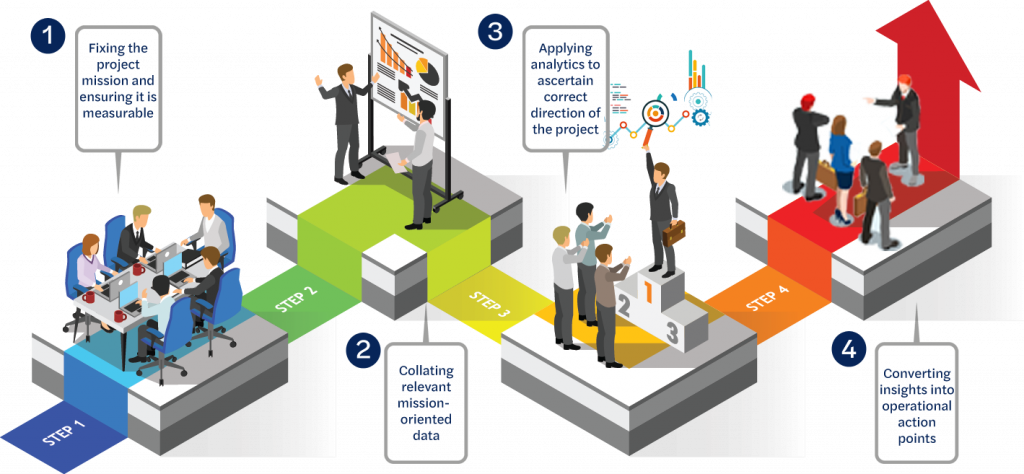
We adopt a four-phased approach to enable data-driven decision making for smart governance. The steps involve:
How We Can Help
KPI Monitoring
KPI’s which vary across departments help determine whether the inputs, outputs, and outcomes of several government programs are aligned with the overall mission and goals. One of the key elements of data-driven governance is KPI Monitoring. Our in-depth knowledge and expertise in advanced analytics play a critical role here and enable governments to:
Read MoreLess
- Identify the important KPIs and ensure they are measurable
- Determine existing and potential trends and patterns
- Measure variance with the plan and drive policy corrections
- Measure and track outcomes and consecutively fine-tune the KPI’s based on results
Program Management
Apart from monitoring the KPIs, data analytics is also gradually driving the programs run by governments. Advanced analytics helps glean predictive and prescriptive insights from existing data and drives leaders to think of new growth strategies, identify opportunities to reduce costs, make faster decisions, and create efficiencies that translate at the program and project levels to deliver value. With TCG Digital’s advanced analytics capabilities you can:
Read MoreLess
- Evaluate several program proposals and prioritize the most viable ones within resource constraints, government’s risk tolerance, feasible size and complexity
- Leverage Lean Six Sigma blended or hybrid methodology to manage projects better, check for cost overruns and delays
- Improve stakeholder management by predicting responses to decisions
- Leverage a dashboard which provides a single view of the larger picture and helps determine how the programs are performing
Service Delivery
Providing sufficient and affordable services to citizens is a core function of governments worldwide. However, service or value related decisions cannot be made by relying on prior experience. Leaders need to harness data within relevant frameworks to arrive at better decisions. We help governments enhance service delivery and provide greater value to residents through innovative combinations of data and related analytics. By collaborating with us you can:
Read MoreLess
- Track KPIs for service delivery in real-time to improve productivity and efficiency
- Drive tangible program results by improving the efficiency of allocation of resources
- Determine process inefficiencies to reduce fraud, waste, and abuse and achieve better outcomes
- Achieve compliance with federal reporting requirements
Budget Control
As governments leverage Big Data and advanced analytics, they can rely on decision-ready information to forecast budgets. They can gain insights into financial information across agencies, departments, and revenue streams to accurately track spending, reduce wastages and spillages, and ensure compliance. Our advanced analytics platform, mcube™ helps:
Read MoreLess
- Monitor various program spends at the department/ministry level through an intuitive and unified dashboard
- Predict future spends with predictive and prescriptive analytics
- Conduct performance budgeting to evaluate cost structures based on outputs generated
- Reduce financial fraud with data-enabled tracking and alert mechanisms
Opinion Mining
Understanding public sentiment and opinion is critical for smart governance. By analyzing online public opinion with Big Data analytics, governments can access a set of new insights that help shape better strategy and accurately measure citizens’ experience of their policies and services. As data on the social web is analyzed, governments can extract public sentiments for right decision making. We, at TCG Digital work collaboratively to help:
Read MoreLess
- Capture the sentiments over any issue, program, government schemes in near real-time basis
- Leverage opinion-mining based natural language processing (NLP) which includes genre distinctions, emotion and mood recognition, ranking, relevance computations, perspectives in text, text source identification and opinion-oriented summarization
- Crawl opinion websites and identify key influencers to ascertain their reach
Information Dissemination
An informed citizenry is an essential component of government transparency. By improving information dissemination practices, governments can improve their democratic accountability. Our advanced analytics capabilities enable governments to:
Read MoreLess
- Publish performance data in public dashboards
- Make export-import trends across commodities, regions, and ports more accessible
- Modernize record management practices to proactively address information dissemination needs
Our Success Stories
Our intelligent solutions help enterprises thrive in industries in which they compete.
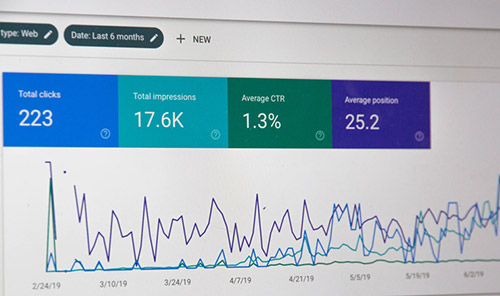
Designed Public-Facing Dashboards for a Commerce Ministry
Designed Public-Facing Dashboards for a Commerce Ministry
Business Challenges
- Lack of a standardized format for data integration and reporting
- Limited visibility into operational processes
- Lack of a mechanism for forecasting exports and imports of individual commodities based on historical data, market growth and economy parameters
Key Deliverables
- TCG Digital developed a set of dashboards with full drill-down and analytics capabilities. The dashboards showcased information related to export-import trends across different commodities, regions, months, and ports
Project Impact and Outcomes
After successful completion of the project, the team at the Ministry could:
- Define, design and develop processes to acquire data from different sources and load it into the enterprise data warehouse (EDW) environment
- Design an architecture capable of handling multiple and ever-expanding lists of data files sent by source systems
- Leverage public-facing dashboards that displayed trade statistics at a very granular level
- Leverage forecasting dashboards to inspect different commodities and assess growth
TCG Digital’s proprietary advanced analytics platform, tcg mcube was the solution used for all the data source connections, ETL, data storage, vizualisation, and advanced analytics

Water Quality and Program Management Analytics for a Public Agency
Water Quality and Program Management Analytics for a Public Agency
Business Problem
- Gaining insight into census data through slicing and dicing for better budgeting and planning
- Active monitoring of operations through dashboards on Water Quality and Inventory Management
- Performing self-service analytics for departmental controlling
Deliverables
TCG Digital provided automated dashboards for Water Quality and Program Management Analytics, Census Analysis, Head-Quarter Financial Analysis and Inventory Management
Project Impact and Outcomes
The dashboards proved beneficial to the agency in the following ways:
- Integrated data from disparate sources of census data and other govt. data sources
- Analyzed demographic spread statistics according to the geographical hierarchy
- Provided advanced visualization like geo-referenced heat-maps
- Highlighted key statistics on various parts of the operational lifecycle like Work Order Status in Indents to Delivery-Order, in Delivery-Order to Dispatch etc.
- Included financial statistics such as budget allocation under major heads
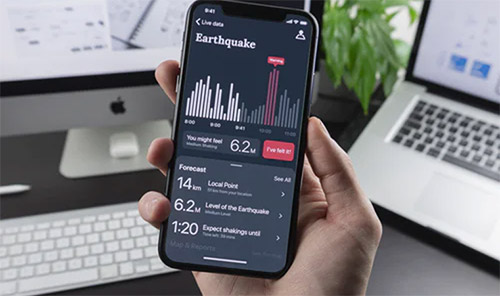
IoT Data Tracking for Population Clustering and Sacred-Place Facilities Management
IoT Data Tracking for Population Clustering and Sacred-Place Facilities Management
Business Problem
- Lack of a suitable environment monitoring system inside the mosques
- A need was felt for a real-time event controlling system to save energy
- Undertaking population clustering and analysis of the Zakah system
Deliverables
TCG Digital provided an advanced IoT-based mosque facilities management system and undertook population clustering analysis for the Zakah system
Project Impact and Outcomes
Use Case I: Facilities Management
The IoT-based system helped the religious facility in the following ways:
- Captured all mosque maintenance data like electricity, lighting, pressure, air quality, humidity, noise through IoT devices
- Monitored mosque operational parameters on a pre-defined frequency
- Predicted failure and maintenance issues
- Monitored public movement using heat sensors
Use Case II: Population Clustering
- Cluster analysis of the data from the Zakah collection system enabled valuable insights. The clusters were developed on several groups of data
- The statistical analytics and services provided were on tcg mcube, TCG Digital’s indigenous COTS platform

Business Intelligence Implementation for Government Hospitals in the Middle East
Business Intelligence Implementation for Government Hospitals in the Middle East
Business Problem
- It became necessary to obtain a single source of truth via a unified BI dashboard for the various hospitals under the ministry
- A need was felt for a platform which could help monitor the KPIs associated with various high and low activity areas
Deliverables
- With the analytics cum business intelligence solution- tcg mcube; we helped the hospitals to analyze and visualize multiple KPIs
Project Impact and Outcomes
- KPI’s were implemented for 76 High Acuity and 125 Low Acuity areas
High Acuity Area KPIs: ICU, PICU, NICU, Operating Theatre, Recovery room, Cardiac Care Units, High Dependency Units, Emergency Departments, Labour & Delivery, etc.
Low Acuity Area KPIs: Laboratory, Radiology, Pharmacy, Administration, Ward Management, Endoscopy, Dialysis, etc. - Some of the KPIs include postoperative sepsis incidence, readmission for complication or infection, central line-associated bloodstream infection, urinary catheter-related infection, ventilator associated pneumonia, severe acute renal failure, nurse to patient ratio, bed turnover ratio, crude ICU mortality, caseload per physician, ventilated patient day rate